For families who lost loved ones on Flight AF447, the wait for justice has been nearly as long and painful as the crash itself was sudden. On Thursday, a Paris appeals court delivered a verdict that many had given up hope of ever hearing: Air France and Airbus are guilty of manslaughter for the 2009 disaster that killed all 228 people on board.
The decision overturns an earlier 2023 acquittal and represents a seismic shift in how French law views corporate responsibility in aviation disasters. But for the victims’ relatives, the celebration is muted. The maximum fine imposed — €225,000 per company — is, in the words of one grieving mother, a token penalty that does little to offset a decade and a half of anguish.
The Crash That Should Never Have Happened
On the night of June 1, 2009, Air France Flight 447 from Rio de Janeiro to Paris flew into a severe storm over the Atlantic. At 38,000 feet, the Airbus A330’s air-speed sensors iced over, feeding conflicting data to the cockpit. Disoriented, the pilots pulled the nose up when they should have pushed it down, causing the aircraft to stall and plummet into the sea.
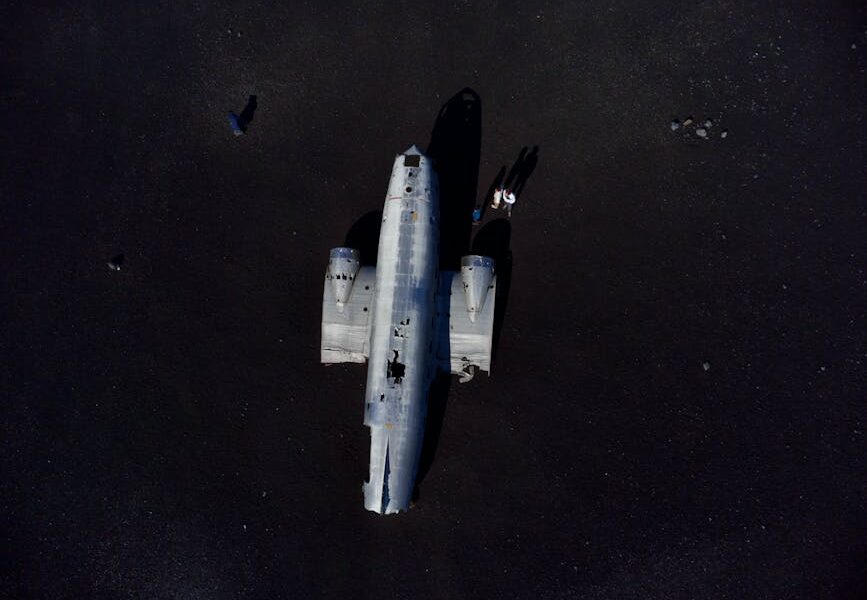
The wreckage lay scattered across 10,000 square kilometres of ocean floor. It took two years to retrieve the flight recorders. By then, investigators had already determined that a deadly combination of technical failure and pilot error was to blame. But the question that haunted courtrooms for years was: did the companies know about the risk, and did they do enough to prevent it?
A Ruling That Changes the Narrative
Thursday’s verdict answers that question with a resounding yes. The court found that both Air France and Airbus were solely and entirely responsible for the crash — a phrasing that analysts say is unusually blunt for a French criminal judgment.
During the eight-week trial, prosecutors accused the companies of spouting nonsense and pulling arguments out of thin air in their defence. Both firms have vowed to appeal, maintaining that they acted responsibly and that the pilots bore primary responsibility for mishandling the emergency.
Yet this ruling underscores a broader shift in public and legal expectations. Aviation safety is not just about pilot training — it’s a systemic responsibility that begins with design, continues through maintenance, and includes transparent communication about known flaws.
The Human Toll in Numbers and Names
Behind the statistics — 216 passengers, 12 crew, 33 nationalities — are stories that make the tragedy achingly personal. Among the dead were three Irish doctors returning from a holiday in Brazil, an 11-year-old boy from Bristol visiting family, and a Brazilian prince aged 26.
Nelson Marinho Filho, a 40-year-old engineer, nearly missed the flight and was the last person to board. His father waited more than two years to bury his remains. Dozens of families faced similar agonising delays, as an international recovery effort pulled 51 bodies from the water — many still strapped into their seats — but could not find everyone.
A Flawed Justice System
While the verdict feels like vindication for victims’ families, the penalty raises uncomfortable questions. €225,000 is less than the price of a single first-class ticket on a long-haul flight. For companies valued in billions, the fine is a rounding error — a sum that may damage reputation but will barely dent the balance sheet.
Daniele Lamy, president of the victims’ association, lost her son in the crash. She welcomed the ruling as a sign that the justice system is at last, taking into account the pain of the families. But even she acknowledged that the financial penalty is insufficient to deter future negligence.
This case joins a long list of high-profile corporate prosecutions — from the Deepwater Horizon oil spill to the Grenfell Tower fire — where courts assign blame but the punishment feels hollow. The real deterrent, some argue, lies not in fines but in the reputational cost and the operational changes that follow.
What Has Changed Since 2009?
The crash led to immediate improvements in aviation safety. Pilot training now includes explicit instruction on handling high-altitude stalls, a scenario that was previously undertrained. The faulty speed sensors — Pitot tubes made by Thales — were replaced across the Airbus fleet with more robust models. Air France revised its procedures for flying through thunderstorms.
But the deeper lesson, underscored by this verdict, is that safety culture must extend beyond pilots to corporate boardrooms. The court found that Airbus had known about the sensor issues years before the crash and failed to act with sufficient urgency. Air France, meanwhile, did not ensure that its pilots were adequately trained on the plane’s stall-protection systems.
A Legacy of Grief and Reform
For every family member who attended the Paris courtroom, the verdict brings a measure of closure — but not peace. The crash remains the deadliest in French aviation history. A memorial at Père Lachaise Cemetery in Paris bears the names of all 228 victims, a permanent reminder of lives cut short.
As Air France and Airbus prepare to appeal, the victims’ families brace for yet another legal marathon. But for now, a French court has said what many knew all along: corporate negligence played a role in this tragedy. Whether that acknowledgment is enough to prevent the next disaster is a question that will outlast any appeal.