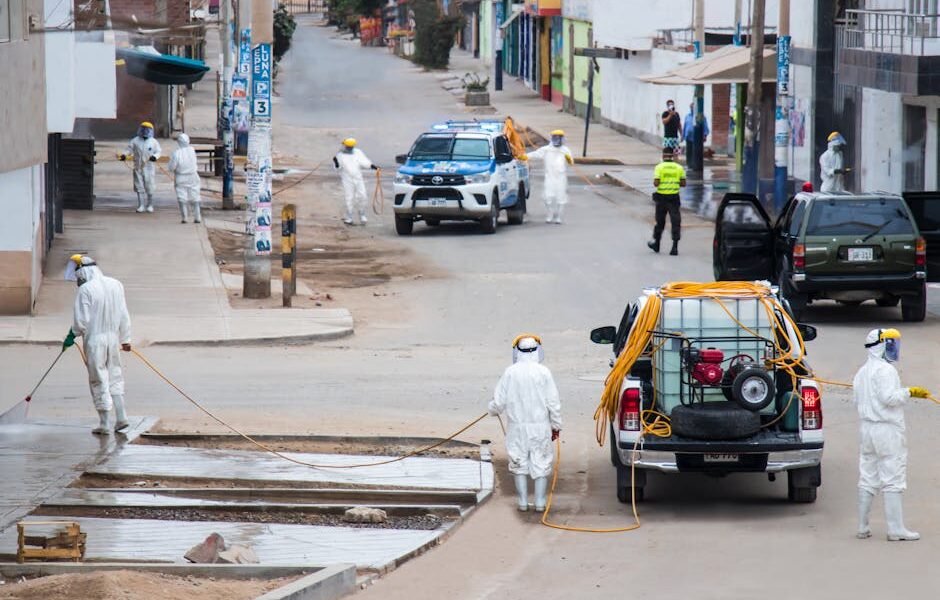
When the United Kingdom announced a new infusion of up to £20 million to combat an Ebola outbreak spanning the Democratic Republic of the Congo and Uganda, the news landed with less fanfare than similar pledges might have generated a decade ago. That quiet reception, however, belies a deeper transformation in how the world approaches viral threats — one that moves beyond reactive firefighting toward a more calculated, regionally aware containment playbook.
Beyond the Headline Numbers
The funding, earmarked for surveillance, treatment centers, and community engagement, arrives at a moment when health officials are acutely aware that the Zaire ebolavirus is no longer a surprise villain. Outbreaks have become cyclical in parts of Central Africa, and each recurrence tests the infrastructure left behind by previous international responses. The UK’s contribution is not merely a cheque; it is a strategic bet on early detection and local capacity building — two pillars that were tragically underfunded during the 2014–2016 West African epidemic.
A Broader Global Health Calculus
What sets this announcement apart is the context of competing health emergencies. The world is still emerging from the COVID-19 pandemic, and health systems from London to Kinshasa remain stretched. In such an environment, allocating £20 million to a relatively contained outbreak (early reports suggest fewer than 100 confirmed cases) might seem like a hard sell to taxpayers. Yet epidemiologists argue that the cost of inaction multiplies exponentially. A single unchecked case in a border region like the one between the DRC and Uganda can ignite a regional crisis, destabilizing economies and overwhelming hospitals already battling malaria, measles, and malnutrition.
This funding reflects a lesson learned the hard way: the price of preparedness is always lower than the price of panic. By investing now, the UK and its partners aim to smother the spark before it becomes a wildfire.
Local Voices, Global Implications
One of the most significant shifts in the current response — and one that the £20 million will help support — is the emphasis on community-led trust-building. In previous outbreaks, foreign medical teams sometimes encountered resistance rooted in historical distrust of outsiders. Today, organizations like the World Health Organization and the UK’s Department of Health and Social Care are channeling funds toward training local health workers, engaging religious leaders, and adapting messaging to fit cultural contexts. This is not charity; it is epidemiology grounded in anthropology.
Consider this: a mobile vaccination team in a remote village in the DRC faces the same logistical hurdles as a rural clinic in the UK — cold chain storage, transport, and communication. But the stakes are different. A rumor about vaccines causing infertility can derail an entire containment effort. The new funding explicitly acknowledges that public health is as much about persuasion as it is about needles.
Original Insight: The Invisible Cost of Neglect
What often goes unmentioned in such announcements is the economic toll of outbreak anxiety on ordinary people. When Ebola emerges, borders tighten, market days shrink, and farmers find it harder to sell their goods. A £20 million pledge, while substantial, barely scratches the surface of the secondary crisis — the lost wages, disrupted schooling, and mental health strain that follow even a contained outbreak. The UK’s contribution should be seen not just as a disease-fighting tool but as a form of economic stabilization. Every pound spent on rapid response in the Congo Basin is a pound that helps prevent a cascade of poverty that can last years after the last patient recovers.
What Comes Next
As the rainy season approaches, the window for effective intervention narrows. The funds will likely flow to several key areas:
- Surveillance upgrades — expanding lab capacity to test samples within hours, not days.
- Cross-border coordination — ensuring Uganda and the DRC share real-time data even when political tensions flare.
- Vaccine logistics — maintaining the cold chain for the Ervebo vaccine in remote, off-grid clinics.
- Risk communication — deploying locally trusted messengers to counter misinformation.
The UK’s pledge is a reminder that global health security is never a finished project. It requires constant, deliberate investment — not just in medicines, but in the fragile trust between governments, communities, and the health workers who stand in the breach.