When the guns fell silent in Gaza, many hoped it was the beginning of a broader calm. But peace, like a patch of dry grass, can be deceiving. While the world focused on the lull in airstrikes and rocket fire, a quieter, slower crisis has been accelerating just a few dozen miles away. In the occupied West Bank, a different kind of violence is reshaping lives: forced displacement, settler expansion, and a steady grinding down of daily life that one UN official recently described as reaching a pace ‘unseen in decades.’
The Hidden Earthquake of Displacement
In early April, the UN human rights office (OHCHR) delivered a stark update from Geneva. The ceasefire between Israel and Hamas had undeniably reduced the scale of destruction in Gaza. But as the smoke cleared, the data from the West Bank told a different story. Families are being pushed off their land at a rate so aggressive that it threatens to redraw the map of the occupied territories permanently. It is not a single, dramatic event that makes the news; it is the slow, bureaucratic erosion of rights—demolition orders, revoked residency permits, and the steady creep of outposts onto hilltops.
From Headlines to Human Impact
For the average person following the news, the West Bank can feel like a secondary theater. After all, Gaza has experienced staggering casualties and a humanitarian collapse. But the current wave of displacement in the West Bank is a strategic, long-term shift. Unlike the war in Gaza, which was a brutal explosion, this is a slow burn. Herds of cattle are replaced by caravans. Olive groves are uprooted for new road networks. And every time an international human rights organization calls for restraint, the machinery of settlement expansion seems to find a new legal loophole to push through. This is not merely a byproduct of the conflict; for many analysts, it is the objective.
Original Insight: The Distraction of the Headline
There is a dangerous irony at play. The ceasefire in Gaza may have inadvertently provided political cover for actions in the West Bank. When the world’s attention is on the devastation in Gaza City or Khan Younis, the incremental seizure of land in places like Masafer Yatta or the Jordan Valley goes largely unrecorded by major news networks. This ‘attention-switching’ effect has been documented in conflict zones before—the pause in one hotspot can lead to a surge in activity in another, quieter theater. Furthermore, the political logic is cold: if you cannot crush a resistance movement completely in one place, you squeeze the territory that might supply its next generation. The West Bank, with its fractious Palestinian Authority and patchwork of autonomous zones, is proving to be the easier target for a systematic change of reality on the ground.
What the Data Tells Us
- Demolition rates: The number of Palestinian homes demolished in the West Bank in the first quarter of this year has already matched figures from entire previous years, targeting structures in communities that have existed for generations.
- Settler violence: Armed settler patrols, often accompanied by military escorts, have increased land confiscations under the guise of ‘security zones’, effectively creating a no-go buffer around Palestinian villages.
- Forced relocation: Bedouin and herder communities, who live without building permits (which are nearly impossible to obtain), are being systematically moved into designated ‘relocation sites’ that lack basic infrastructure like water and electricity.
Looking Beyond the Horizon
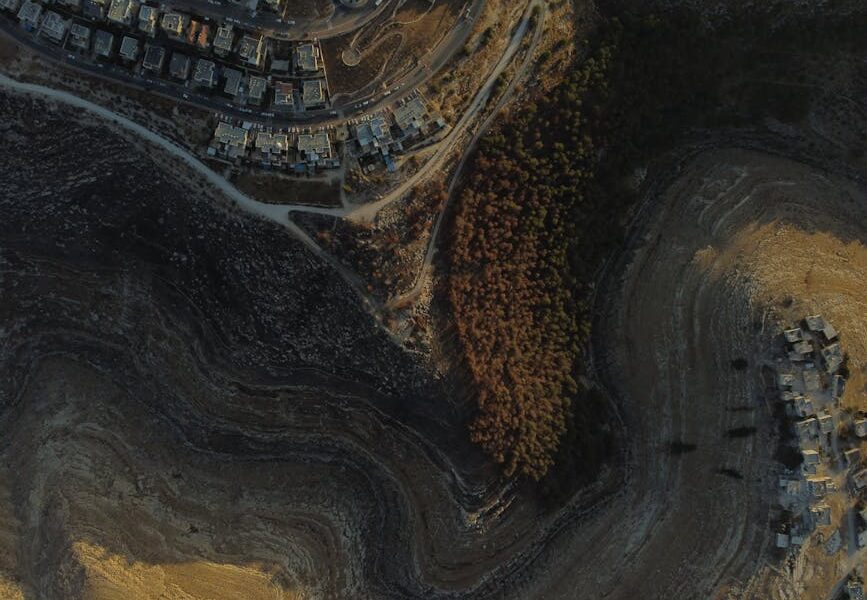
The international community has long condemned settlements as illegal under international law, but condemnation without enforcement has become a hollow ritual. The reality is that the West Bank is being transformed into an archipelago of isolated Palestinian enclaves, surrounded by a growing matrix of Israeli-controlled infrastructure. If the world wants to salvage the possibility of a two-state solution, it cannot afford to look away from the West Bank just because the bombs in Gaza have temporarily stopped. The killing in the West Bank is not done with missiles; it is done with surveyor’s tape, bulldozers, and the quiet, implacable force of a fait accompli.