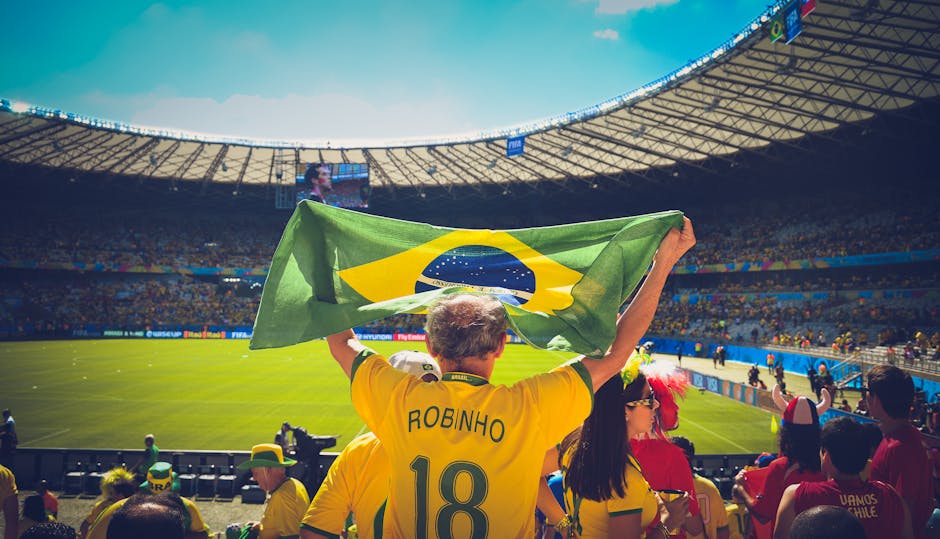
As the football world counts down to the kick-off of the 2026 World Cup across North America, a curious new tradition has taken root among fans—one that has little to do with flags, face paint, or even the official tournament songs. Instead, supporters are turning to artificial intelligence to produce their own viral team anthems, flooding social media with tracks that are equal parts catchy tribute and copyright conundrum.
The trend gained traction earlier this year with a song for the French national side called “Imbattables,” crafted by an artist known as Crystalo, who self-identifies as France’s leading AI music creator. That track leaned on a simple call-and-response structure, shouting out stars like Kylian Mbappé. A Brazilian version soon followed, swapping the melody for a driving phonk beat and layering team chants with AI assistance. Then came imitations for Portugal, Argentina, Germany, and Colombia—each recycling the same formulaic elements: the rhythmic name-dropping, the thumping bass, and the obligatory shout-out to the team’s “king.”
What’s fascinating—and perhaps unsettling—is not just the speed at which these songs spread, but the reception they’ve received. Audiences are racking up millions of plays, and some fans openly admit they prefer these AI-generated tracks to the official anthem commissioned by FIFA from musicians Jelly Roll and Carin Leon, or even the long-anticipated Shakira release. It’s a striking vote of confidence in machine-made music, and it upends long-held assumptions about what fans truly value in a rallying cry.
The Copycat Machine
Guilherme Maia, the Brazilian producer behind the viral phonk anthem, acknowledges that later songs copied his format almost beat-for-beat. But he doesn’t seem bothered by the imitation. “What I see happening now is more about people following a trend or trying to recreate a feeling,” he said, adding that artistic emulation has always been part of music. Still, he draws a bright line when it comes to ownership. “You can’t just copy someone else’s work or use samples without permission, even if AI is involved.”
Yet the technology itself blurs that line. Jason Palamara, a music technology professor at Indiana University, points out that AI models are trained on vast datasets of existing songs, and it remains unclear how the original artists are credited—or compensated. “It had to come from somewhere,” he said. The output can also be riddled with telltale oddities: a Portugal anthem sung in a Brazilian accent, or a Colombia track that mispronounces James Rodríguez’s name in English. These glitches, Palamara argues, reveal a lack of depth. “It’s one compact product, rather than multiple tracks that have gone into it, where it has more texture.”
Why Complexity Doesn’t Matter (to Some)
But the real surprise may be that many listeners simply do not care about complexity. Morgan Hayduk, co-CEO of music rights software company Beatdapp, sees a clear divide. “There seems to be a cohort of people who actually don’t care,” he said. “They like the music, and they like the back story that it came from a large language model and not a songwriter.” This, he suggests, points to a future where AI can thrive in niche, high-volume contexts—stadium chants, ad jingles, short-form content—places where function and novelty matter more than artistic nuance.
This shift raises deeper questions about the nature of creativity itself. For decades, we have assumed that a song’s value is tied to the human effort and emotion poured into it. But when a fan can generate a perfectly serviceable anthem in minutes, what happens to the premium we place on the “craft” of songwriting? The answer, as Hayduk frames it, is a “thorny Rubicon” that the music industry must cross: how to monetize and attribute work when the creator is essentially a prompt.
Beyond the Buzz: What This Means for the Future of Music
The World Cup fan-song trend is more than a quirky footnote to the tournament. It is a live experiment in how audiences relate to art when the artist is invisible—or algorithmic. The official FIFA track, curated by a global body and performed by established musicians, carries institutional weight. The Shakira single, with her star power, is a commercial juggernaut. Yet neither has sparked the same grassroots enthusiasm as a loop of synthetic beats and a list of player names. That tells us something about fandom in the age of personalization: people want to see themselves reflected in the music, even if the reflection is generated by code.