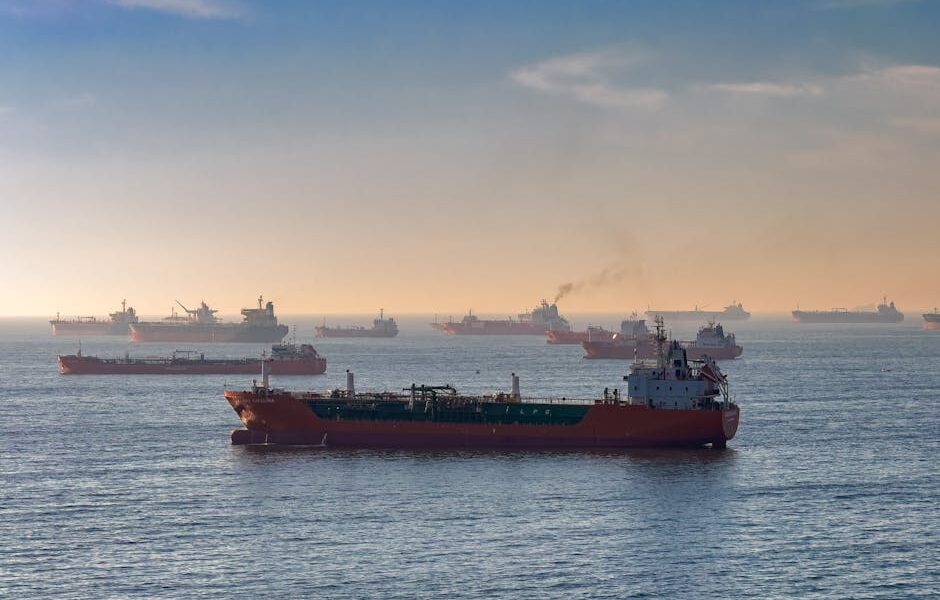
Strait of Hormuz tensions: A familiar pattern emerges in the Gulf
Strait of Hormuz tensions are escalating once again, just when diplomats thought they had carved out a moment of calm. Early Thursday morning, the Islamic Revolutionary Guard Corps (IRGC) claimed it struck a US military base in retaliation for what it called an American attack on an Iranian position near Bandar Abbas airport. The US military, for its part, said it had shot down four Iranian drones and hit a ground control station that was about to launch a fifth. It called the action “purely defensive” and aimed at preserving a ceasefire that has already been tested multiple times.
This exchange is the latest in a series of direct military confrontations between the United States and Iran since a fragile truce took effect. Neither side has declared the ceasefire dead, but actions on the ground — and in the air — are chipping away at its credibility. The IRGC said its strike occurred at 4:50 am local time, and though it did not specify the location of the base it targeted, Kuwait confirmed its air defenses were responding to what it described as an “enemy” attack.
Trump’s blunt warning to Oman
Speaking at a cabinet meeting on Wednesday, US President Donald Trump dismissed a report from Iranian state TV suggesting a draft agreement was in the works to restore commercial shipping through the strait, with Iran and Oman jointly managing traffic. Trump was characteristically blunt: “Nobody’s going to control (the strait). It’s international waters and Oman will behave just like everybody else or we’ll have to blow them up.” The comment, directed at a longstanding US ally, rattled observers and underscored the high-stakes brinkmanship at play. Trump added that he was not yet satisfied with any potential deal with Iran and ruled out easing sanctions as part of current negotiations.
Oil markets, which had fallen more than 5 percent on Wednesday, rebounded sharply after reports of the latest escalation. US crude futures gained over 3 percent, while stocks dipped and the dollar strengthened. For global consumers already grappling with fuel costs, the message was clear: any spark in the Gulf could send prices soaring again.
The economic front is the real battlefield
While the military skirmishes grab headlines, the deeper struggle between Washington and Tehran is playing out on the economic front. The Strait of Hormuz, a narrow waterway through which about a fifth of the world’s oil passes, has effectively become a chokepoint in a duel of blockades. The US has imposed a naval blockade on Iranian ports, while Iran has responded by disrupting shipping through the strait — a move that hurts both Iran’s adversaries and the global economy.
Doug Bandow, a senior fellow at the Cato Institute, argues that this economic standoff has handed Tehran an unexpectedly powerful weapon. “Trump is in a very difficult position. He has inadvertently given Iran a very powerful weapon by closing the Strait of Hormuz, and he’s not willing to risk US ships to try to open it,” Bandow told Al Jazeera. “It’s going to be hard for him not to make a deal that’s to the satisfaction of Iran.”
This dynamic creates a paradox: Trump’s maximum-pressure strategy has cornered Iran economically, but it has also given Tehran leverage it otherwise would not have. By closing the strait, Iran can inflict pain on global markets and force Washington to the negotiating table on terms that are more favorable to Tehran. The result is a standoff where neither side can afford to blink — but both are running out of patience.
What’s really at stake in the Strait of Hormuz tensions
Beyond the immediate military and economic jockeying, the Strait of Hormuz tensions raise fundamental questions about the future of global trade and maritime security. The strait is not just a strategic asset for Iran; it is a global commons. Treating it as a bargaining chip sets a dangerous precedent for other chokepoints around the world, from the Suez Canal to the South China Sea. If the US and Iran carve out a deal that effectively puts one nation in charge of a waterway that belongs to everyone, it could invite copycat behavior elsewhere.
Iranian lawmakers, meanwhile, are digging in. Ebrahim Azizi, head of the Iranian parliament’s national security committee, said Trump’s “rhetoric” would not force Iran to back down on its demands to continue enriching uranium, maintain influence over the strait, and see sanctions lifted. In a post on X, Azizi described Trump as “seeking a way out of this strategic deadlock, alternating between issuing threats and appealing for an agreement.”
For now, the truce holds by a thread — but it has already been violated three times since it was announced. Each strike, each drone shot down, each angry statement from Washington or Tehran brings the region closer to a miscalculation that could spiral into a wider war. The world watches, and waits, and hopes that someone — somewhere — is still willing to talk. For more on related developments, see our analysis on Strait of Hormuz Tensions Threaten Fragile Iran Ceasefire Talks. For a broader perspective on global risks, read Global Tensions Are Stress-Testing the System Designed to Prevent World War III. For authoritative background on the strategic importance of the Strait of Hormuz, visit the U.S. Energy Information Administration. For analysis of US-Iran tensions, see the Council on Foreign Relations.