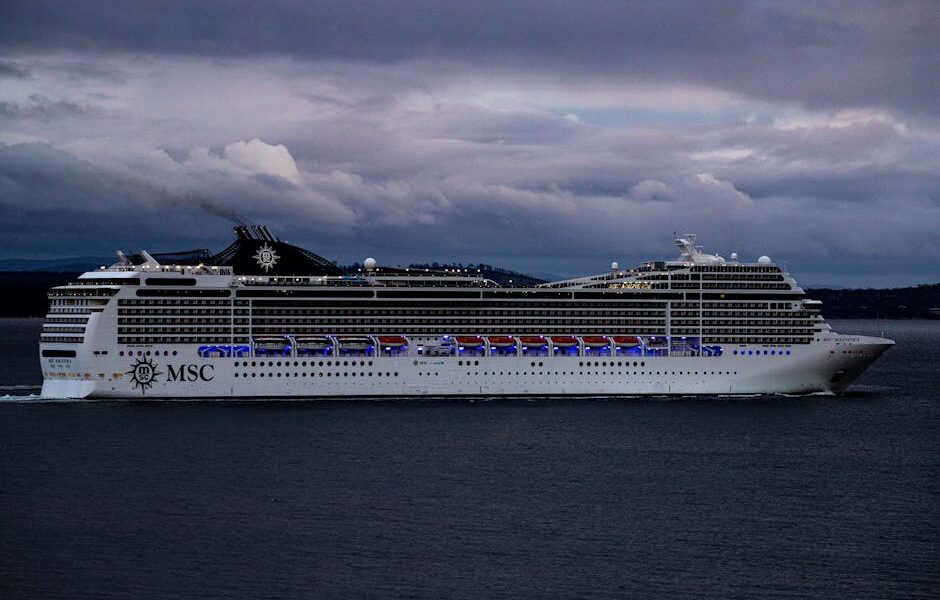
On a routine voyage across the remote waters of the Antarctic Peninsula, the MV Hondius became the unlikely epicenter of a rare and deadly health alert. The vessel, usually associated with polar exploration and pristine landscapes, is now the focus of an international response to a cluster of hantavirus cases that has already claimed three lives. While the situation is serious, the World Health Organization has been quick to point out that the risk to the general public remains low. But beyond the headlines, this incident serves as a stark reminder of how quickly a local health event can become a global coordination challenge.
Understanding the Threat: Andes Virus and Human-to-Human Transmission
Hantaviruses are not new to public health, but the specific strain identified here—Andes virus—is unusual. Most hantaviruses are spread through contact with rodent droppings, urine, or saliva. The Andes virus, however, has the rare and disturbing ability to pass from one person to another, though only through close and prolonged contact. This makes it different from other hantaviruses and far more concerning in confined settings like a ship. As of the latest reports, eight people have been infected, with three deaths, and five of those cases have been confirmed as hantavirus. Given the incubation period, which can range from one to six weeks, health officials acknowledge that more cases may surface in the coming days.
Dr. Tedros Adhanom Ghebreyesus, WHO Director-General, stressed that while this is a serious incident, the assessment of public health risk remains low. This phrasing—low public health risk—is careful clinical language that reflects the reality that the outbreak appears contained to the ship and its close contacts. Yet for the families of the deceased and the passengers currently in quarantine, the risk feels anything but abstract.
A Test for the International Health Regulations
What makes this outbreak significant, beyond the immediate tragedy, is the way it tests the International Health Regulations (IHR)—the legally binding framework that governs how countries and the WHO respond to public emergencies that cross borders. The IHR were designed for exactly this kind of event: a disease threat that does not respect national boundaries, emerging in an international space like a cruise ship. The WHO was notified on Saturday, 2 May 2026, and within days, the organization has deployed an expert onboard the MV Hondius to conduct a comprehensive medical assessment of all passengers and crew. They have also arranged for 2,500 diagnostic kits to be shipped from Argentina to laboratories in five different countries, strengthening testing capacity across borders.
This rapid response is a testament to lessons learned from past outbreaks—including the COVID-19 pandemic, which exposed deep gaps in global coordination. But it also raises a question: what happens when the next threat arrives in a region with fewer resources, or on a vessel that is not answerable to any single nation? The cruise ship industry, with its multinational passengers and complex legal jurisdictions, is a uniquely challenging environment for disease control. The WHO is now developing step-by-step operational guidance for the safe and respectful disembarkation of passengers, but that guidance is reactive. It fills a gap that should have been addressed long ago.
Original Insight: The Hidden Vulnerability of Modern Travel
Beyond the immediate public health response, this outbreak should prompt a broader conversation about the vulnerability of modern travel infrastructure. Cruise ships, in particular, are floating microcosms of global society: thousands of people from dozens of countries living in close quarters, sharing air, food, and sanitation systems. While the industry has improved hygiene protocols since the norovirus outbreaks and, more recently, the COVID-19 pandemic, hantavirus presents a different challenge. It is not primarily a respiratory virus, so the standard precautions—masking, distancing, ventilation—may be less effective. The Andes virus transmits through direct contact with bodily fluids or contaminated surfaces, making shared cabins, dining halls, and medical facilities high-risk zones.
Moreover, the psychological toll on passengers and crew should not be underestimated. Being quarantined on a ship that has become synonymous with a deadly virus, far from home and family, with uncertain timelines for release, is a form of trauma. The WHO has emphasized the importance of treating remaining passengers with dignity, but dignity requires more than just medical testing. It requires clear communication, mental health support, and transparent information about risks and next steps. These elements are often the first to be overlooked in a crisis, but they are essential for both public trust and compliance with health measures.
What Comes Next: Monitoring, Containment, and Prevention
For now, the WHO’s priorities are clear: ensure that affected patients receive appropriate care, protect the remaining passengers and crew, and prevent any further spread of the virus. The deployment of an expert team aboard the ship is a critical step, as it allows for real-time risk assessment and medical triage. Meanwhile, the distribution of diagnostic kits will help laboratories in Argentina, Chile, Uruguay, and other affected countries to rapidly identify potential new cases and trace contacts. The hope is that swift action will prevent this cluster from becoming a wider outbreak.
Yet the ultimate lesson from the MV Hondius is one of preparedness. The modern world is too interconnected for any country—or any industry—to treat infectious disease as someone else’s problem. The IHR exist precisely because health threats know no borders. But regulations are only as effective as the political will to enforce them, and the funding to support them. As Dr. Tedros noted, this event is a demonstration of why the IHR exist. It is also a reminder that the next major outbreak may not start in a laboratory or a wet market, but in the shared spaces of a cruise ship, a bus, or an airport lounge. The question is not if such an event will happen again, but whether we will have learned enough to respond with both speed and humanity.