Beyond the Star Power: A System Built for Dominance
If you scan the roster of any top European club this season, you’ll likely spot a French name. From Paris Saint-Germain to Real Madrid, and from Arsenal to Bayern Munich, French footballers are everywhere. But this isn’t an accident. It’s the result of a deliberate, decades-old experiment that transformed a nation of underachievers into a french football talent factory. As the 2026 World Cup approaches, with France co-favourites alongside Spain, it’s worth asking: how did a country that couldn’t qualify for two consecutive World Cups in the early 1990s become the envy of the football world?
The answer isn’t simply Kylian Mbappé or even the famed Clairefontaine academy. It’s a layered, government-backed infrastructure known as the Centres de Formation — a network of 16 regional training hubs that began in 1974. This system doesn’t just produce athletes; it nurtures complete individuals, keeping young players close to their families while drilling them in the fundamentals of the game. The result is a depth of talent so profound that even the players who missed the World Cup cut would form a squad valued higher than Brazil’s or Portugal’s.
The Frustration That Sparked a Revolution
To understand the present, you have to look at the painful past. From the 1930s through the 1970s, French teams consistently fell short on the biggest stages. It was this chronic underperformance that pushed national team manager Georges Boulogne, in the early 1970s, to propose a radical solution: create a state-sponsored academy system. The French government, seeing sports as a vehicle for promoting national ideals, backed the plan. The Institut National du Football at Clairefontaine became the crown jewel, but the real power lay in the network of centres spread across the country and its overseas territories.
From Street Football to Structured Excellence: The French Football Talent Factory in Action
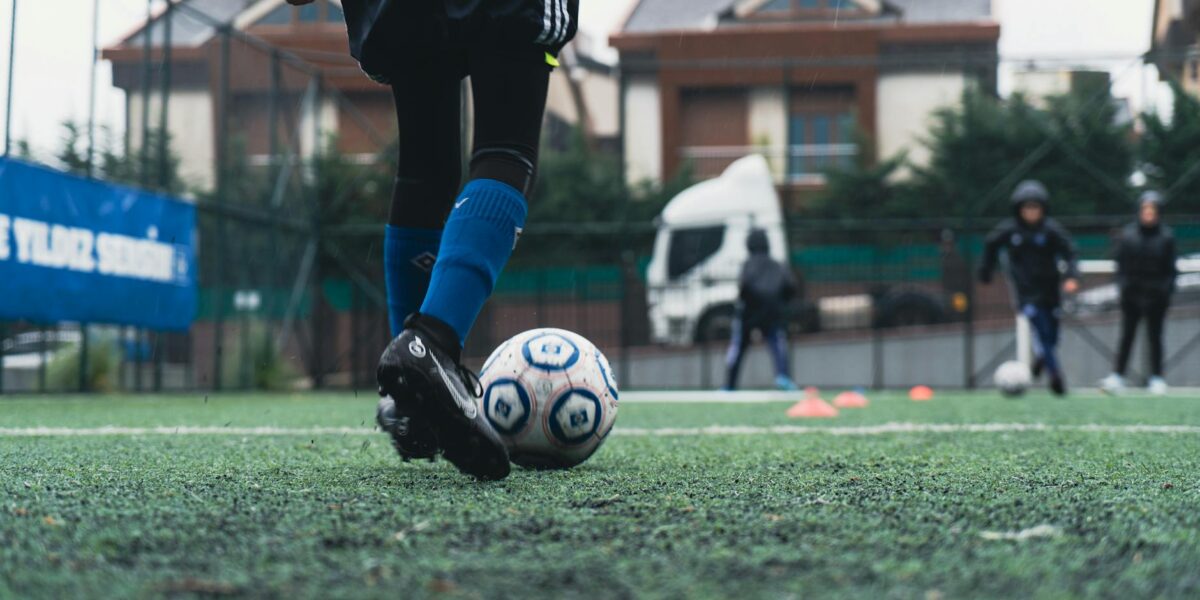
What makes French training unique isn’t a single secret drill. According to longtime coach and scout Stephane Nado, it’s a combination of hard work, structure, and organisation. The player remains the heart of the project. At Clairefontaine, training blends the improvisation of street games with tactical discipline. Coaches emphasise 1v1 and 2v2 battles, then progress to possession exercises like 5v2. The goal is to produce players who can fight, dribble, and make split-second decisions. As Franck Bentolila, an administrator at Clairefontaine, notes: “In America, you have a basketball in your hands; in France, you have a football at your feet when you are a baby.” This cultural immersion, combined with free access to facilities, creates a fertile ground for talent.
The Immigration X-Factor
Beyond the academies, a less discussed but equally critical factor is immigration. Bernard Lama, who captained France in the 1990s, puts it bluntly: people arriving from Africa, French Guyana, and Martinique bring two powerful gifts — music and sports. The multiethnic squad of 1998, famously dubbed “Black-Blanc-Beur”, was not a one-off. It was the flowering of a trend that continues today. Players like Ousmane Dembélé and Désiré Doué are not naturalised foreigners; they are French-born, raised in the suburbs of Paris, carrying hunger and a raw talent that academies refine.
Lama warns that modern football risks producing “robotic” players. France’s edge, he argues, is its ability to still produce mavericks — players like Mbappé, Dembélé, and Rayan Cherki, who can win a match with individual brilliance. “We have maybe four or five guys who can make the difference,” Lama says. “When you have that explosion of talent, it gives the coach more solutions.”
Private Academies and the Parisian Crucible
While the Centres de Formation remain the backbone, a new phenomenon is accelerating French dominance: private academies. Bentolila highlights that Paris and São Paulo are the world’s best talent hotspots. In Paris, amateur clubs run by passionate volunteers train children as young as eight, often twice a day. These kids play against older opponents, learning to thrive under pressure. By age twelve, Bentolila says, they play like Mbappé. These grassroots operations are so effective that they sometimes outperform the youth teams of Barcelona and professional French clubs. The result is a pipeline that never runs dry.
The 2026 World Cup: More Than Just Mbappé
As the 2026 World Cup draws near, the focus will naturally fall on star players. But the real story is the system that produced them. France doesn’t just rely on Mbappé; it has a conveyor belt of talent ready to step in. The players left off the roster — names like Eduardo Camavinga, Leny Yoro, and Boubacar Kamara — would form a squad worth over €400 million. That’s not luck. That’s the payoff from a fifty-year investment in a philosophy that treats football development as a national project. Whether France lifts the trophy this summer or not, the blueprint is already being studied by rivals around the globe. For more on how national systems shape success, see our analysis of the Netherlands’ World Cup prospects. To understand the broader impact of sports infrastructure, check out how the 2026 World Cup is adapting to global challenges. For further reading on talent development, visit FIFA’s official site and UEFA’s development resources.