In a world where neglected tropical diseases still trap millions in cycles of poverty and pain, a quiet victory in North Africa offers a powerful blueprint. Algeria has officially stamped out trachoma as a public health threat, according to a recent validation by the World Health Organization. The achievement places the country among an elite club—the 10th in Africa and the 29th globally to eliminate the world’s top infectious cause of blindness. But beyond the statistical milestone, this is a story of how building trust in a public health system can defeat a disease that has plagued humanity for millennia.
More Than an Eye Infection: The Human Toll of Trachoma
Trachoma isn’t a one-and-done illness. Caused by the bacterium Chlamydia trachomatis, it spreads through direct contact with infected eye discharge—via fingers, shared cloths, or the buzzing flies that haunt crowded, water-scarce communities. The real damage comes from repetition. Each reinfection scars the inner eyelid, eventually turning the lashes inward to scrape the cornea like sandpaper. This agony, known as trachomatous trichiasis, leads to irreversible blindness or severe visual impairment in roughly 1.9 million people worldwide. For those 97 million still at risk globally, the disease doesn’t just steal sight; it destroys livelihoods, isolates individuals, and deepens the poverty that made them vulnerable in the first place.
A Century of Commitment, Not a Sprint
Algeria’s success didn’t come from a short-term campaign. It was a slow burn that began over a hundred years ago with the founding of the Pasteur Institute in Algiers in 1909. After independence, local physicians like the legendary Professor Mohamed Aouchiche carried the torch. But the game-changer came in 1974, when Algeria rolled out a free national public healthcare system. This wasn’t just a policy shift—it was a declaration that health was a right, not a privilege. Decades later, that foundation allowed the country to effectively deploy the WHO’s SAFE strategy: Surgery for those with advanced disease, Antibiotics to clear infections, Facial cleanliness to break transmission, and Environmental improvements like clean water and better sanitation.
Where the Rubber Met the Road: Tackling the Last Hotspots
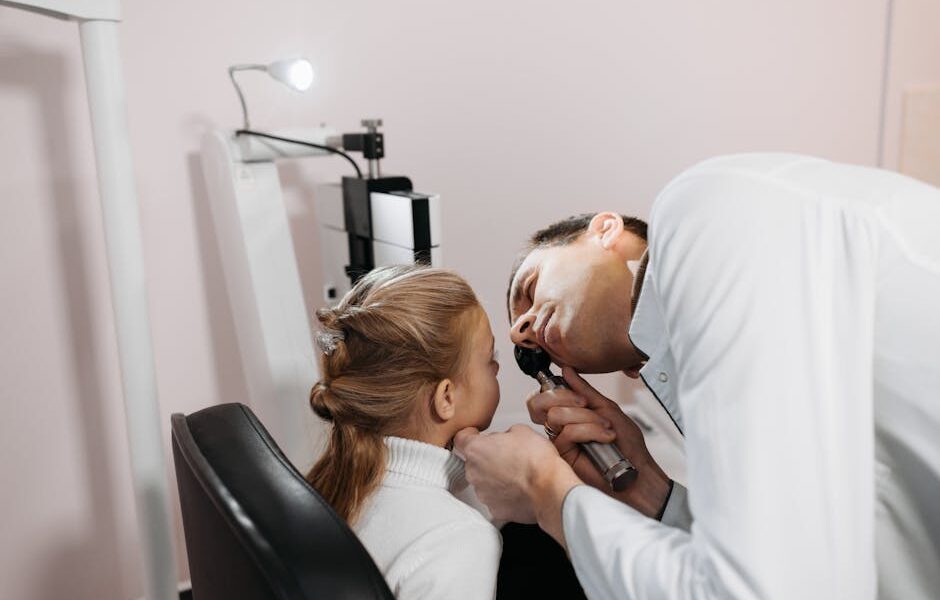
The final push had a clear geographic focus. Between 2013 and 2015, a dedicated national expert committee zeroed in on 12 southern provinces—arid regions like Tamanrasset, Illizi, and Tindouf where trachoma had stubbornly held on. Here, climate and poverty conspired to make water scarce and flies abundant, a perfect storm for transmission. The strategy was unglamorous but relentless: door-to-door screenings, mass antibiotic distributions, and community education. By 2022, surveys confirmed that active infections had dropped to negligible levels everywhere. In three stubborn areas, workers went house-to-house to hunt down and treat every last case of trichiasis, leaving no one behind.
The Unseen Factor: A System That Stays On
Here’s the original insight that many global health reports gloss over: Algeria’s victory is as much about sustainability as it is about eradication. The country didn’t just clear the disease—it built a backstop. Its robust school health system catches infections early, its health information system tracks outbreaks in real-time, and specialized eye care is available even in remote areas. This infrastructure ensures that even if trachoma tries to creep back, it will be squashed quickly. As WHO Director-General Dr Tedros Adhanom Ghebreyesus noted, this triumph “connects the past, present, and future.” The past was the century of groundwork; the present is the cross-sector coordination of health, education, and water ministries; and the future is a surveillance system that acts as a permanent shield.
What This Means for the Fight Against Neglected Diseases
Algeria is now the 62nd country globally—and the 23rd in Africa—to eliminate at least one neglected tropical disease. That’s a promising statistic in a broader battle where over a billion people still suffer from conditions like river blindness and schistosomiasis. The Algerian model shows that political will, long-term investment, and community-level grit can outlast even the most entrenched diseases. As Dr Mohamed Janabi, WHO’s Africa director, put it, this transforms the lives of children, women, and entire families. And for the rest of the world, it offers a simple, hard-won lesson: you don’t need a miracle cure. You just need a system that refuses to give up.