In a dramatic turn of events that has captured international attention, Bolivia finds itself at a crossroads after weeks of escalating unrest forced President Luis Arce to reshuffle his cabinet. This move, while aimed at quelling public anger, raises deeper questions about the stability of the nation’s democratic institutions and the growing gap between government promises and everyday realities.
From Streets to Suites
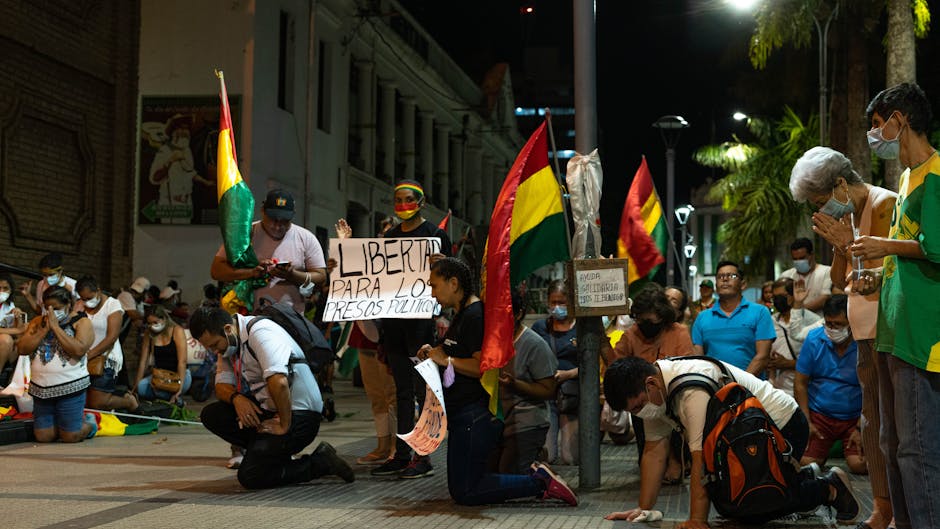
The protests, which began as localized demonstrations over economic grievances, quickly snowballed into a nationwide movement demanding systemic change. Key flashpoints included fuel shortages, soaring inflation, and a perceived lack of government accountability. What started with disruptions to public transport and market closures escalated into roadblocks that paralyzed entire cities, cutting off supplies and isolating communities.
- Major highways linking La Paz to Cochabamba were blocked for days.
- Schools and businesses shut down as citizens joined marches.
- Police and protesters clashed in multiple districts, leading to injuries.
A Cabinet Shuffle – but Will It Work?
President Arce’s decision to replace several key ministers, including those in charge of economy and hydrocarbons, is widely seen as an attempt to restore credibility. However, critics argue that this is a superficial fix for systemic rot. “Changing faces without changing policies is like rearranging deck chairs on the Titanic,” says political analyst Marta Quispe, a professor at the University of San Andrés. The new appointees face the unenviable task of negotiating with powerful social movements that have lost trust in the administration.
Historical Echoes: A Cycle of Unrest
Bolivia has a long history of social upheaval driven by resource inequality and ethnic tensions. From the 2003 gas war that toppled a president to the 2019 political crisis, the country’s recent past is dotted with moments when street power trumped ballot boxes. This current wave of unrest shares DNA with those earlier movements: a deep-seated anger over the distribution of wealth from Bolivia’s vast lithium and natural gas reserves. For many citizens, the wealth generated by these resources has not trickled down to their communities.
Beyond the Headlines: The Human Cost
What the global news often misses is the day-to-day toll on ordinary Bolivians. In El Alto, a working-class city that is a protest stronghold, families are burning tires to keep warm because they cannot afford cooking gas. In rural areas, farmers cannot get their crops to market. The disruption is not just political; it is deeply personal. One shopkeeper in La Paz, Maria Condori, told reporters: “We don’t have time for politics. We need bread and medicine. But when the roads are closed, we have neither.”
What Comes Next?
For President Arce, the cabinet reshuffle buys time but not necessarily peace. The key will be whether his new team can deliver tangible results before protests reignite. Meanwhile, opposition leaders, including those allied with former President Evo Morales, are already framing the unrest as a vote of no confidence in the current government. Bolivia’s fragile stability hangs in the balance, and for the people in the streets, the reshuffle is just the first page of a story that is far from over.