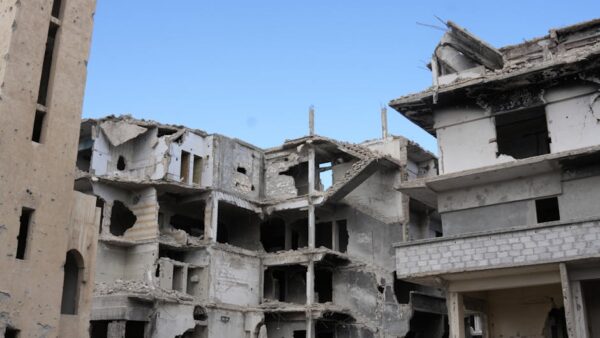
There is a grim and familiar rhythm to life in Gaza City these days: the roar of a jet, the crash of a collapsing building, and then the frantic work of pulling bodies from the rubble. Late Wednesday night, that rhythm played out once again on a residential street, leaving at least ten people dead—five of them children—and shattering the fragile calm of the Eid al-Adha holiday, further dimming hopes for a Gaza ceasefire.
According to local hospitals, the strike flattened part of a building and sent shrapnel into a nearby camp for displaced families. Among those killed was a man the Israeli military describes as a senior Hamas commander, Imad Asleem, along with his teenage daughter Israa. But for the neighbors who survived, the attack was not a surgical strike on a militant—it was a catastrophe that turned a holiday gathering into a scene of horror.
When Chocolates Turn to Dust: Gaza Ceasefire Hopes Crushed
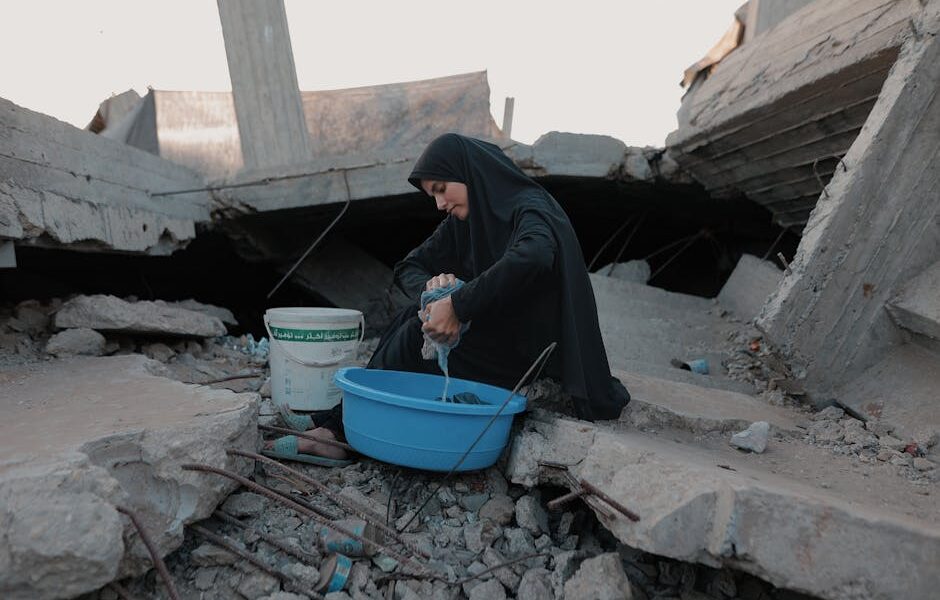
Um Azzam al-Zaim, a woman who lives next door to the targeted building, recounted the chaos to journalists. She said children from the neighborhood had climbed onto the roof of the building to share sweets during the Eid holiday. Moments later, the strike hit. I saw bodies of children who had been blown off the top, she said. We were soaked when a water tank above our tent was hit. Rubble fell on me from outside. It was difficult to get out.
Another survivor, Raslan Bajou, was asleep in his tent when the blast woke him. His wife was injured. My neighbours were in pieces, he said, his voice still raw from the shock. This is a sin, I swear it’s a sin.
The attack comes as Israel continues a campaign of targeted killings against Hamas military leaders—a strategy that has intensified even as indirect peace talks remain frozen, undermining any chance for a Gaza ceasefire. Just a day earlier, the newly appointed head of Hamas’s military wing, Mohammed Odeh, was killed along with his wife and two sons. His predecessor, Izz al-Din al-Haddad, was killed in May. Israel’s defense minister, Israel Katz, reiterated the country’s vow to eliminate everyone who led the October 7, 2023 attack.
A Bleeding Wound in Stalled Talks: Gaza Ceasefire Remains Elusive
These strikes do not happen in a vacuum. They are the military expression of a political deadlock. The United States has been brokering talks aimed at advancing a peace plan that would require Hamas to disarm and Israel to withdraw troops from Gaza. But neither side appears willing to move first. For Israel, the logic is straightforward: take out the enemy’s command structure, one leader at a time. For Hamas, each funeral becomes a recruiting tool, a fresh grievance that hardens resolve.
But what gets lost in the high-stakes game of targeted assassinations is the human cost paid by ordinary families. The five children killed in Wednesday’s strike were not combatants. They were children who, moments before death, were doing what children do everywhere on a holiday: sharing sweets, laughing, and enjoying a rare moment of joy in a place that has known little else but war.
This is where the broader context matters. Since October 2023, more than 72,800 people have been killed in Gaza, according to the Hamas-run health ministry—a figure the United Nations considers reliable. Some 1,200 people were killed in the initial Hamas attack on Israel, and 251 hostages were taken. The numbers are staggering, but they are also abstract. The real story lives in the testimony of people like Raslan Bajou and Um Azzam al-Zaim, who must now bury their neighbors, including children, and somehow find the strength to go on living in a place where a holiday can turn into a funeral in seconds.
On Thursday, large crowds gathered in Gaza City for a funeral procession. A body wrapped in a Hamas flag was carried on a stretcher, a gun placed on top of it. Green flags, the color of Hamas, waved above the crowd. It was a scene of defiance, but also of deep, unending sorrow.
The Cycle Spins On: Gaza Ceasefire Still a Distant Hope
For those who have followed this conflict over decades, the feeling is one of terrible déjà vu. The strikes will continue. The funerals will multiply. The talks will stall. And somewhere, a child will be handed a piece of chocolate—only to have the sky fall a moment later.
The question that lingers, unanswered, is whether there is any strategy that can break this cycle. Killing leaders has not stopped the rocket fire. It has not brought the hostages home. And it has not made Gaza safe for children to celebrate a holiday. Until the people with power—in Jerusalem, in Gaza, in Washington—can see past the next strike and the next funeral, the rhythm of tragedy will keep playing. And the children will keep dying.
For more on the broader regional impact, read Beirut Blast Threatens Fragile Truce as Civilian Toll Mounts in Lebanon. Also, see Gaza Ceasefire Crumbles as Israel Expands Territorial Control.
For authoritative analysis, visit the United Nations Office for the Coordination of Humanitarian Affairs and BBC News Gaza Coverage.