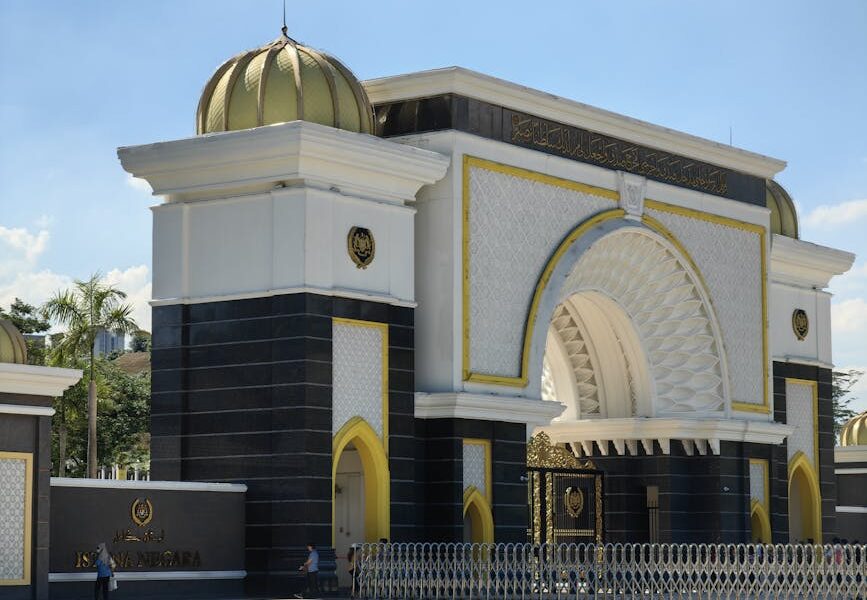
When the Malaysian monarchy becomes a target for online mockery, the country’s internet regulator doesn’t just hit ‘report’—it hits back with legal force. In a move that underscores the growing tension between free expression and respect for traditional institutions, Malaysia’s Communications and Multimedia Commission (MCMC) has formally ordered TikTok to crack down on content deemed offensive to King Sultan Ibrahim. The directive, issued on Thursday, demands the platform remove videos and images—including AI-generated fakes and manipulated clips—that the regulator calls ‘grossly offensive, false, menacing and insulting.’
Why the King Matters in Malaysia
To understand the severity of this action, it helps to know how Malaysia’s monarchy functions. Unlike some royal families that serve purely ceremonial roles, Malaysia’s king—the Yang di-Pertuan Agong—holds a unique constitutional position, including powers over judicial appointments and the ability to grant pardons. The throne rotates among nine Malay sultans every five years, making each reign a delicate political balancing act. Insults against the king aren’t just personal attacks; they’re seen as undermining a pillar of national identity and stability. A 1948 sedition law still on the books makes it a crime to incite ‘hatred or contempt’ against the royal family, and the MCMC has historically been quick to enforce it online.
TikTok’s Troubled Track Record in Southeast Asia
The current order is not an isolated incident. In January, Malaysia briefly blocked access to the AI tool Grok after it was used to generate sexually explicit deepfakes without consent. Now, the government is preparing to enforce a new law banning social media for children under 16—following similar actions in Australia, Indonesia, and France. What stands out here is the regulator’s explicit dissatisfaction with TikTok’s previous responses. The MCMC stated it found the platform’s handling of earlier notifications ‘unsatisfactory’ and demanded a formal explanation for why the defamatory content wasn’t blocked sooner. This suggests a pattern of frustration: Malaysia feels TikTok is dragging its feet on content moderation, while the company must balance local laws against its global community guidelines.
The Bigger Picture: Who Polices the Internet’s Kings?
This clash is about more than one king’s image. It forces a deeper question: in an age of generative AI and viral disinformation, who decides what’s defamatory, and how fast should platforms act? From a regulatory standpoint, the MCMC is doing what any government would—protecting its head of state from coordinated mockery. But critics worry that the broad language of ‘offensive and menacing’ could be used to silence legitimate political satire or dissent. In practice, Malaysia’s sedition law has historically been used against opposition figures and activists, not just trolls. The risk is that by focusing on AI-generated attacks on the king, the government might also pave the way for stricter controls on all forms of online criticism.
There’s also a practical question for TikTok: can its moderation algorithms reliably distinguish between a harmless meme and a legally actionable insult, especially when dealing with culturally specific concepts like the Malaysian monarchy? The platform has teams of human moderators and automated tools, but the sheer volume of content—and the speed at which AI-generated fakes can spread—makes this a near-impossible task. The MCMC’s order essentially demands perfection from a system that, by design, is imperfect.
What Comes Next
The MCMC has made its position clear: ‘digital platforms operating in Malaysia must uphold their responsibilities in maintaining a safe, secure and respectful online environment.’ TikTok, which did not immediately respond to requests for comment, now faces a choice: either comply with the order by strengthening moderation policies and blocking the flagged content, or risk fines, service restrictions, or even a temporary ban. For users in Malaysia, this means that anything even remotely satirical about the king could disappear from their feeds overnight. And for the rest of the world, it’s a reminder that the battle over online speech is never just about technology—it’s about power, tradition, and who gets to decide what’s a joke and what’s a crime.
Key Takeaways
- What happened: Malaysia’s internet regulator ordered TikTok to remove content—including AI-generated videos—that defames King Sultan Ibrahim.
- Why it matters: The order highlights Malaysia’s strict sedition laws and its growing frustration with social media platforms’ moderation practices.
- Broader context: This is part of a regional trend, with Malaysia also preparing to ban social media for children under 16 and previously blocking the AI assistant Grok.
- What’s at stake: The tension between protecting national symbols and preserving free expression, especially as generative AI makes it easier to create convincing fake content.