When Benjamin Netanyahu told an audience this week that the Israeli military would expand its control over Gaza to 70 percent, he might as well have been describing an Israel Gaza territorial grab in slow motion. The numbers have shifted quietly, almost unnoticed, since a U.S.-brokered ceasefire supposedly froze the frontlines in October 2025. But the reality on the ground tells a different story: Israeli troops now hold roughly 64 percent of the strip, up from 53 percent, and the prime minister has made clear he intends to go further.
The remark — caught on camera by Channel 12 — came in response to a heckler who urged a full takeover. Netanyahu demurred only slightly: “We’re going in order. First 70 percent.” For the two million people crammed into what remains of Gaza, that order means yet another squeeze into an ever-shrinking pocket of land, already reduced to rubble after two years of war that has killed more than 72,000 Palestinians.
What 70 percent control actually looks like in the Israel Gaza territorial grab
To understand what this means, you have to picture the map. The so-called Yellow Line — drawn up during last year’s ceasefire talks — was supposed to mark the boundary of Israeli-occupied territory. It didn’t hold. In March, the military quietly redrew the lines, notifying aid organisations that it now controlled an additional 11 percent. That shift, which went largely unreported at the time, has since been formalised by Netanyahu’s latest directive.
- Loss of agricultural land — Much of the newly seized area includes farmland that once fed Gaza.
- Displacement pressure — Aid groups warn that concentrating the population into a smaller area will create a humanitarian catastrophe.
- Checkpoints and movement — Every new kilometer of control means more roadblocks and restrictions on civilians trying to reach hospitals, markets, or family.
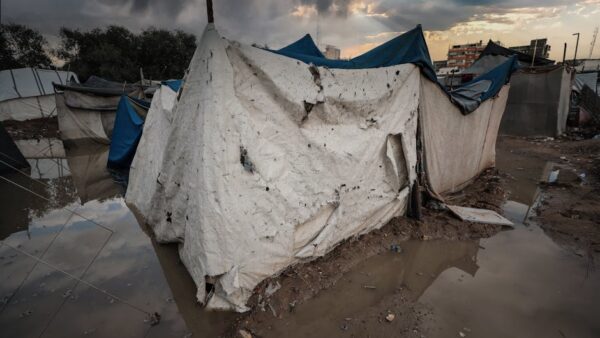
The United Nations Office for Humanitarian Affairs (OCHA) has documented the toll: families sleeping in overcrowded tents, schools converted into shelters, a near-total lack of clean water, and rats and insects spreading disease. Air strikes and shelling remain a daily reality, despite the nominal truce. Al Jazeera’s tally counts at least 2,400 Israeli violations between October and April alone.
The ceasefire illusion
If the word “ceasefire” conjures images of silence and safety, Gaza has never seen that version. The October 2025 agreement was always fragile, built on the assumption that both sides would honour commitments they had little interest in keeping. Hamas was supposed to disarm; Israel was supposed to halt military operations and allow humanitarian supplies to flow. Neither has happened fully.
Nickolay Mladenov, the high representative of the U.S.-founded Board of Peace for Gaza, warned the UN Security Council last week that the current status quo risks becoming “permanent.” He urged the international body to press both sides, using “every means at its disposal,” to stop the drift toward an endless low-grade war.
The bigger picture nobody is talking about
Here’s what often gets lost in the headlines: This Israel Gaza territorial grab isn’t just about territory. It’s about redefining what a ceasefire means. Traditionally, ceasefires freeze the frontlines and create space for diplomacy. What we’re seeing in Gaza is the opposite — the ceasefire has become a cover for gradual annexation. By framing the expansion as a “directive” rather than a violation, Netanyahu normalises the idea that Israel can take land without triggering a formal collapse of the truce.
This sets a dangerous precedent. If the international community accepts that a ceasefire can coexist with territorial expansion, then every future ceasefire becomes a licence for the stronger party to keep pushing. The Geneva Conventions are clear: an occupying power cannot unilaterally change the boundaries of occupied territory. But enforcement has always been weak, and with global attention split — particularly since the U.S.-Israel military campaign against Iran began in February — Gaza has slipped down the priority list.
What comes next?
For the people of Gaza, the immediate future looks bleak. Another 10 percent might not sound like much, but on a strip that is already one of the most densely populated places on earth, it translates to hundreds of thousands of people being squeezed into an even smaller area with fewer resources. Health authorities reported that on the same day Netanyahu made his announcement, an Israeli air raid killed at least 10 people, including four children.
The war that began with the Hamas attacks on October 7, 2023, has no end in sight. The original October 2025 ceasefire was supposed to be the first step toward a broader political solution. Instead, it has become a tool for incremental control. Until the international community treats these expansions as what they are — violations of the ceasefire’s spirit and letter — Gaza will continue to shrink, and its people will continue to pay the price. For more on related regional tensions, see In Gaza, a Ceasefire Dream Fades as Targeted Strikes Hit Homes and Families and Strait of Hormuz Tensions Flare Again as US and Iran Test Fragile Ceasefire. Learn more about international law from the International Committee of the Red Cross and UNISPAL.